Most product reels fail in the first second, and it is not because of the product. It is because the clip opens on a logo, a wide table shot, or a hand slowly reaching for something. Nothing is happening yet, and the thumb keeps moving.
After shooting reels for food, drink and retail brands in Toronto for a few years, we stopped improvising and settled on a structure that works almost every time. Three scenes, in a fixed order, shot to a fixed list. It is boring to describe, and it is why we can shoot six to ten finished reels for a CPG brand in a single day. Here is the whole formula.
The 3-scene structure
Scene 1: the hook (0 to 2 seconds)
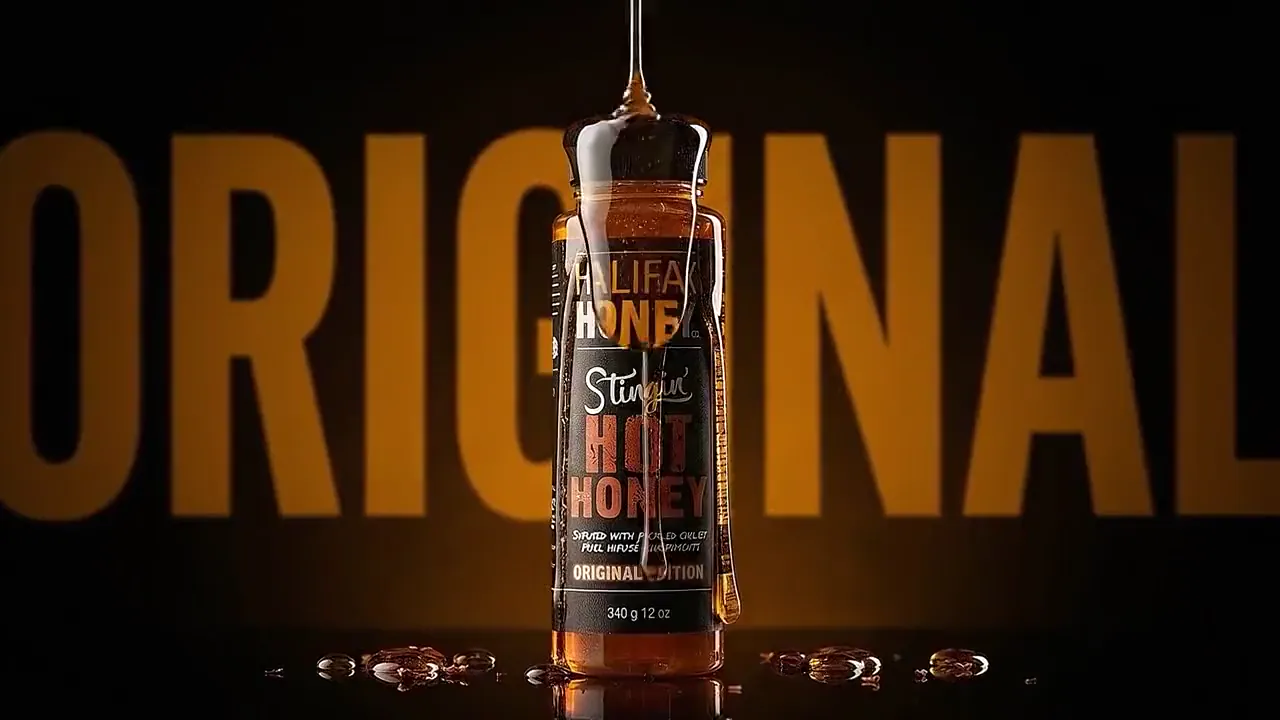
One shot, tight, already moving when the clip starts. This is almost always a texture shot: the thing the product does that nothing else does. Hot honey pouring in slow motion. A spoon dragging a swirl through the surface of hummus. Sauce hitting a hot pan. A watch crown catching light as it turns. No title, no logo, no context. The viewer should not know what the brand is yet; they should only know that they want to see the next frame.
The hook has to start mid-action. If the pour begins at frame one, the first frame is a static jar. Start the camera early, start the pour, and cut in after the motion is already visible.
Scene 2: the product in use (2 to 8 seconds)
Now we show what it is and where it lives. The hummus goes on the pita. The honey lands on the pizza. The watch goes on the wrist and the wrist goes into a jacket sleeve. Two or three quick cuts, each held for under two seconds, each with a hand or a face in frame so the scale and the context register. This scene answers "what is it" and "when would I use it" without a single word of copy.
Scene 3: the payoff and brand card (8 to 12 seconds)
The satisfying end: the bite, the first sip, the lid twisting shut, the finished plate pulled back to a clean wide. Then the product held still, label readable, for a beat, with the brand name or a three-word line overlaid. That final frame is what gets screenshot, saved and sent. It is also the only place the logo appears.
Total length: 8 to 15 seconds. Anything longer and you are making a different kind of video.
Why three scenes and not more
Because three is the smallest number that tells a story: desire, context, resolution. Every additional scene is a chance for the viewer to leave, and on a product reel the viewer has already decided by second four whether they care. A tight three-scene cut also makes batch shooting possible, which is the part that makes the economics of CPG video production work for small brands.
Real examples from the formula
- Hanes Hummus, "Hot Date" and "Avocado Basil". Two flavours, the same three-scene skeleton. Hook: a spoon dragging a swirl through the surface, colour front and centre. Use: pita dip, a spread on toast, a hand pulling the container across a table. Payoff: the bite, then the tub, label readable. Two reels that look like a set because they are one.
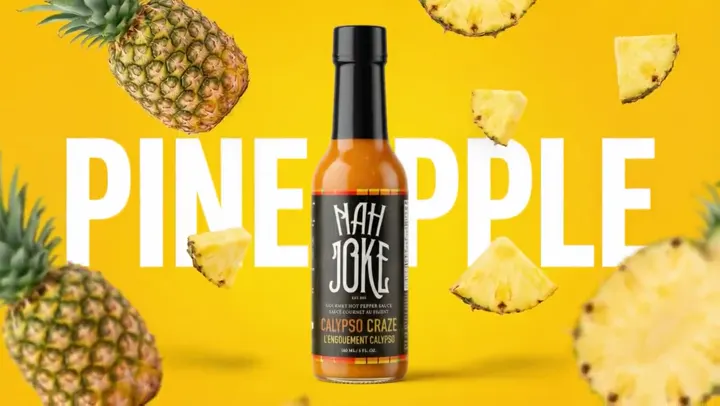
- Nah Joke, cinematic reel and "Flavor Explosion". The cinematic cut leans on scene 2 with more camera moves and a slower build for the brand page. "Flavor Explosion" is the pure formula: a hard hook on the sauce hitting food, a rapid use sequence, a payoff on the bottle.
- Halifax Honey, melt reel. The hook is the whole reel's reason to exist: honey melting over something hot, shot macro at a high frame rate. Scene 2 is the drizzle finishing on the plate. Scene 3 is the jar.
- Rey Watches, reveal and waterproof reels. Not food, same structure. The reveal opens on light moving across the dial. The waterproof reel opens on water hitting the case in slow motion, then the watch on a wrist, then a clean product frame.
- Carobium, 3-products reel. Three SKUs, one reel. Each product gets a one-second texture hook in sequence, then a shared use scene, then the trio lined up for the brand card. Useful when a brand needs to show range without three separate posts.
Several of these are on the work page if you want to see the structure play out at speed.
Lighting and macro for food and drink
Food video lives or dies on two things: how the light hits the surface, and how close you can get without losing focus.
Light
- One hard key from the back or side. Backlight is what makes a honey pour glow and a sauce look wet. Front light flattens everything.
- Negative fill on the opposite side. A black card kills the bounce so the texture has shadow and depth. This matters more than a second light.
- Keep colour temperature consistent across the day. If you are shooting ten reels for one brand, they need to look like siblings. Lock white balance; never leave it on auto.
- Steam, drips and splashes are lit from behind or not at all. If the product does something in the air, the light has to be behind it to read on camera.
Macro
- A true macro lens or a quality close-focus prime. Phone macro modes soften too much for a hero hook.
- Stop down enough that the swirl or pour stays sharp across its depth. Shallow focus looks great on a still and falls apart when the subject moves toward the lens.
- Shoot hooks at 60 or 120 fps and conform to slow motion in the edit. Pours, melts and splashes need it; hands and bites usually do not.
- Lock the camera. A texture hook on a tripod or slider reads as intentional. Handheld macro reads as a mistake.
Sound design is half the hook
A large share of reel views happen with sound on, and even viewers watching muted respond to a cut that is edited to sound. We build every product reel with three layers: a licensed music bed cut to the scene changes, a foley layer recorded on set or added in post (the crack of a lid, the drizzle, the spoon on ceramic), and, where it fits, a short sound effect on the hook to make the opening frame land. For food, the foley usually matters more than the music. People can hear crunch and pour, and it does more for appetite than any caption.
The hook earns the view. The use scene earns the trust. The payoff earns the save. Skip one and the reel does two-thirds of its job.
4:5 or 9:16?
We shoot every product reel to cover both, and here is how we decide what to post:
- 9:16 is the default for Reels, TikTok and Shorts. It fills the screen and the hook has nowhere to hide. Frame the action in the centre 4:5 region anyway, so nothing important lives at the top or bottom.
- 4:5 is for the Instagram grid and paid placements that run in feed rather than full screen. It also survives a crop from horizontal far better than 9:16 does.
- Composition rule: shoot with a 4:5 safe zone marked in the monitor, deliver 9:16 as the master and export 4:5 from the same timeline. One shoot, both formats, no reshoot.
Batch shooting 6 to 10 reels in a day
This is what the fixed structure buys you. Because every reel needs the same three ingredients, a full day can be organized by scene type rather than by reel:
- Morning: all the hooks. Macro rig locked, backlight set, product after product. Pour, swirl, drizzle, reveal. Ten hooks in two hours because the setup never changes.
- Midday: all the use scenes. Move to a kitchen, a table, a wrist. Hands and faces, two or three setups, every product cycled through each.
- Afternoon: all the payoffs. Clean product frames on a consistent surface, labels forward, plus the bite or sip for each.
- Last hour: safety and variations. Alternate angles on the two or three hooks that looked best in the monitor.
Editing then becomes assembly: pick a hook, a use scene and a payoff for each product, cut to the music bed, add the foley, export in both ratios. Six to ten finished food video reels from a day is the normal outcome, not the ceiling. This is the same "one shoot, 30 days of content" logic from our creative systems post, narrowed to a single product line.
Where the formula breaks
- Products with no texture moment. Some packaged goods do not pour, melt or move. The hook then has to come from the environment, such as a hand opening a box or a shelf being stocked, and it takes more thought.
- Explaining a benefit that is not visible. "Made with no added sugar" cannot be shot. That belongs in a caption or a separate talking-head format, not forced into scene 2.
- Brands that want the logo first. We understand the instinct. We still put it last.
If you are weighing a reel library against a longer brand piece, our note on brand film vs. reels covers the decision.
FAQ
How long should a product reel be?
Eight to fifteen seconds. The hook takes the first two seconds, the product-in-use scene runs to about second eight, and the payoff with the brand card closes it out. Longer cuts belong on a product page, not in the feed.
Should product videos be 4:5 or 9:16?
Deliver 9:16 as the master for Reels, TikTok and Shorts, and export a 4:5 version from the same timeline for the Instagram grid and in-feed paid placements. Frame the action inside a 4:5 safe zone so both versions work without a reshoot.
How many product reels can you shoot in one day?
Six to ten finished reels is a normal outcome for a CPG brand when the day is organized by scene type: all hooks in the morning, all use scenes midday, all payoff and brand-card shots in the afternoon.
What equipment do you need for food video reels?
A camera that shoots 60 or 120 fps, a macro or close-focus lens, one hard backlight with negative fill, a locked-off tripod or slider, and a way to record foley on set. The setup matters more than the camera body.
Related notes
More from The Cut
 Website video above the fold without killing page speed: how we ship motion that still scoresMotion sells. A 40 MB autoplay loop does not. This is the pattern running on our own homepage.Read the note
  Toronto event videography: how one event produced 200K views (and what we shoot to get there)Plan for the vertical feed, edit before the lights come up, and post like the event is still happening.Read the note
  How to prepare for a video shoot: the founder's checklist we send before every Narsaik production dayMost bad shoot days were lost the week before. Here is what we ask every client to have ready.Read the note